FROM AN IDEA TO A TASTING MENU
FROM AN IDEA TO A TASTING MENU
Inside the Research & Development Kitchen at Quan Tea
There is a quiet paradox at the heart of fine dining: the simpler a dish appears, the more intricate the journey behind its creation is likely to be. A crystal-clear consommé, a perfectly grilled slice of lotus root, or a cup of tea poured at precisely the right temperature may remain on the table for only a few moments. Yet behind that fleeting experience often lie weeks of tasting, countless revisions, and an unwavering pursuit of balance—an invisible process that rarely reaches the guest’s eye.
This is where every seasonal menu at Quan Tea begins: in its Research & Development kitchen, where creativity is guided less by recipes than by curiosity.
The first question is never “What should we cook next?”
Instead, it is something far simpler, yet infinitely more challenging:
“What story is nature telling us this season?”
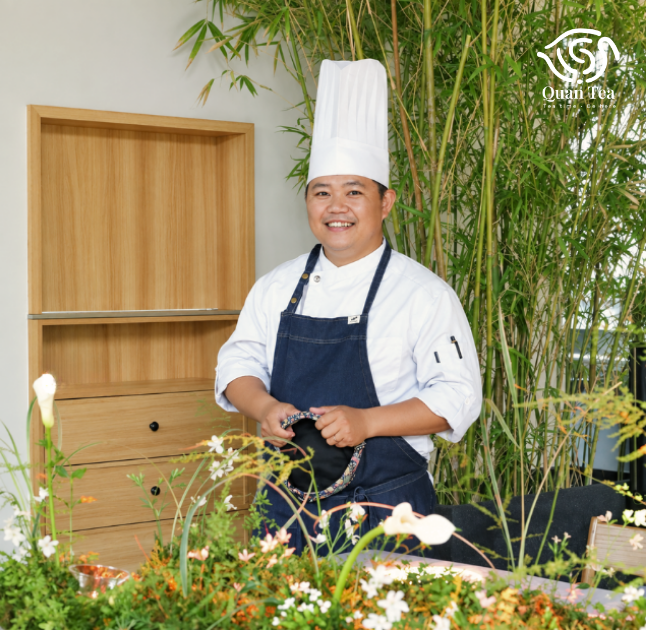
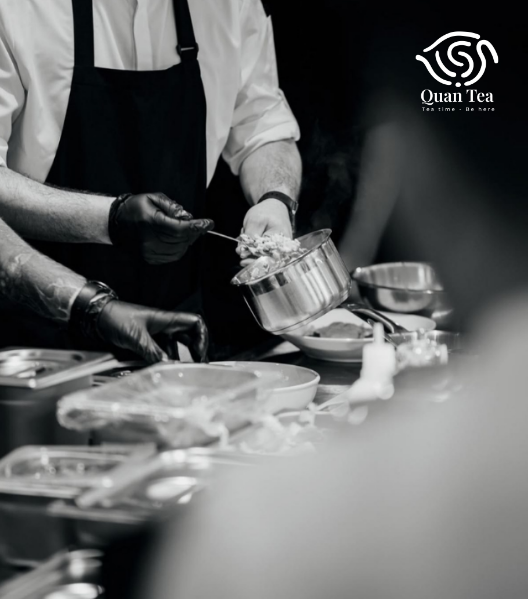
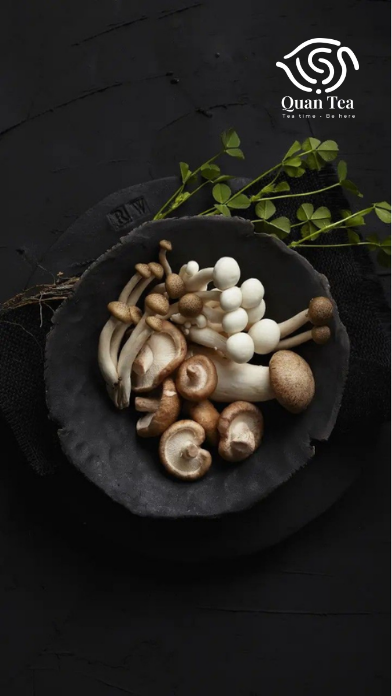
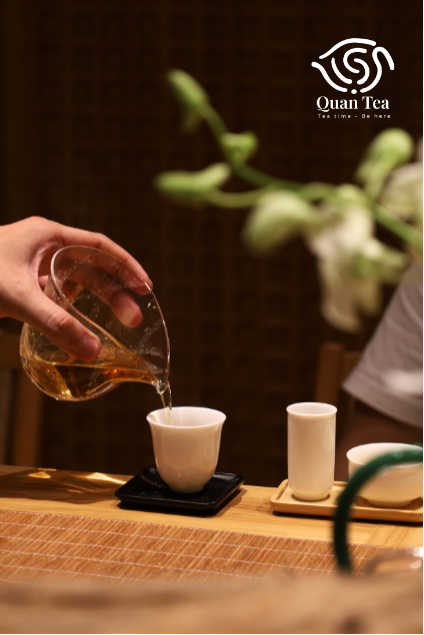
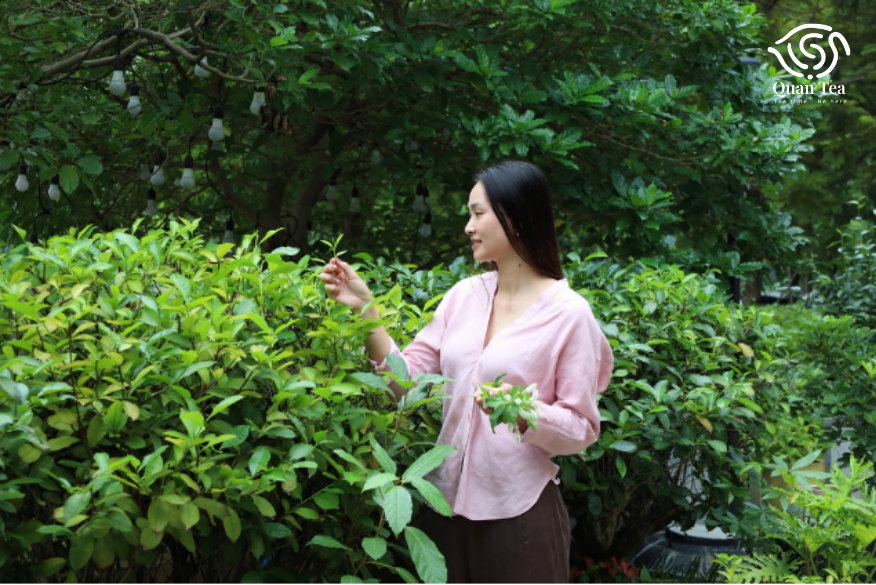
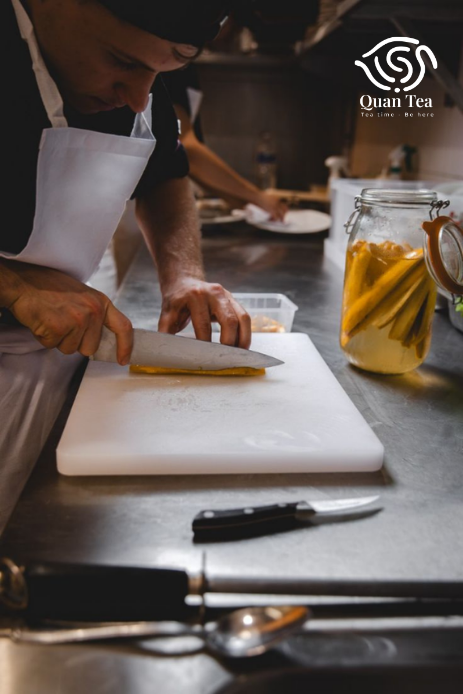
“In the R&D kitchen, failure is never the opposite of success. It is part of the journey towards the right flavour.” A newly harvested tea from the misty mountains of northern Vietnam, the brief arrival of wild mushrooms, or the delicate fragrance carried by the first days of summer may all become the starting point of a new culinary narrative. These seemingly ordinary observations gradually evolve into a tasting menu, where every course contributes to a single, carefully composed story. At Quan Tea, ideas are not measured by novelty alone. They must first answer a more important question: Is this a flavour worth telling? That philosophy shapes the work of Gia Huy, who leads the restaurant’s culinary research and development. Rather than creating dishes that impress through complexity or visual spectacle, the focus lies in understanding the true character of every ingredient and allowing thoughtful technique to reveal, rather than conceal, its identity. Because in a tasting menu, nothing exists by accident. Every ingredient, every texture, every aroma has a reason to be there. “Some flavours reveal themselves only to those patient enough to let nature speak.” Rarely does a dish reach the menu after its first trial. Some ideas find their final form within days, while others require weeks—or even months—of refinement. The challenge seldom lies in technical difficulty, but in achieving a balance so delicate that even the smallest adjustment can transform the entire experience. Thirty extra seconds over the fire may rob a mushroom of its natural succulence. A few degrees too hot, and a tea infusion loses the gentle elegance it was meant to express. One herb, however aromatic, may overwhelm the quiet sweetness of another ingredient. These decisions are measured not only in grams and seconds, but also through repeated tasting, observation, and instinct. It is this patience that distinguishes a pleasant dish from one refined enough to become part of Quan Tea’s tasting journey. Not every experiment succeeds. In the R&D kitchen, letting go of an idea is as important as creating one. Some dishes are flavourful but fail to converse naturally with tea. Others possess visual beauty yet interrupt the rhythm of the menu. Occasionally, a dish is simply set aside—not because it lacks quality, but because it belongs to a different season, a different story, or a different moment altogether. After all, a tasting menu is never a collection of individual dishes. It is a narrative, unfolding one chapter at a time. Among every ingredient explored within Quan Tea’s kitchen, tea remains the most influential. Unlike many restaurants where beverages are selected after the food is complete, tea enters the creative process from the very beginning. A high-mountain oolong with mineral depth may inspire an entire course. Ancient Shan Tuyet tea, carrying its signature notes of smoke and wild forest, might become the foundation of a broth, a sauce, or even the emotional thread connecting several dishes together. “Tea does not complete the dish. It completes the way we experience it.” Tea is not confined to the teacup. It finds its way into consommés, dressings, desserts, and carefully composed moments between courses. Whenever an ingredient changes, the entire menu is tasted again, ensuring that every infusion continues to speak naturally with every plate. The process resembles orchestration. When one instrument changes, the entire symphony must be heard again. Perhaps the most surprising truth about Quan Tea’s R&D kitchen is that much of its work takes place without cooking at all. Instead, it begins with observation. Observing how ingredients evolve with the seasons. Observing how different techniques transform texture. Observing how guests respond to the first sip of tea or the final bite of a course. Some notes occupy only a single page in a notebook yet remain relevant for years. Some ideas are carefully archived, waiting patiently until the right season returns. Within this kitchen, time is never treated as a constraint—it is considered an essential ingredient in the creative process itself. This is why every seasonal menu at Quan Tea carries its own identity. Not because novelty is pursued for its own sake, but because each menu reflects a different rhythm of nature. Guests may encounter a dish only once before it quietly gives way to another story, another harvest, another season. “Every menu is designed not to impress, but to leave behind a lasting memory.” Fine dining is often judged by what arrives at the table. For those working behind the scenes, however, the journey begins long before service. It begins with discovering an unfamiliar ingredient. With notebooks filled with crossed-out ideas and revised sketches. With tasting sessions that continue until every member of the team agrees that flavour, texture, aroma, and tea have finally found their balance. These are the moments that never appear on the menu. Yet they define every dish that does. At Quan Tea, the Research & Development kitchen is far more than a place where recipes are created. It is where ideas are nurtured with patience, where every ingredient is listened to before it is transformed, and where a tasting menu is considered complete only when every course, every cup of tea, and every pause between them comes together to tell one seamless story. For in the end, the finest dining experiences are not remembered simply for what was served. They are remembered for the care, intention, and quiet craftsmanship that linger long after the final cup of tea has been poured.