


WHEN EVERY CUP OF TEA REFLECTS WHO YOU ARE
WHEN EVERY CUP OF TEA REFLECTS WHO YOU ARE
Find Your Tea Profile
– Discovering the Taste That Is Uniquely Yours
In the world of fragrance, people often speak of discovering a signature scent—a composition that feels instinctively aligned with their personality rather than simply following trends. Wine enthusiasts, meanwhile, learn to recognise their preferences through grape varieties, acidity, tannic structure and terroir. Tea, despite offering an equally remarkable spectrum of aromas and flavours, has traditionally been approached from a different perspective. Conversations have tended to revolve around the tea itself—its cultivar, its origin, or the craftsmanship behind its production—rather than the person holding the cup.
Yet perhaps the more interesting question is not Which tea is the finest? but rather, Which tea feels most like you?
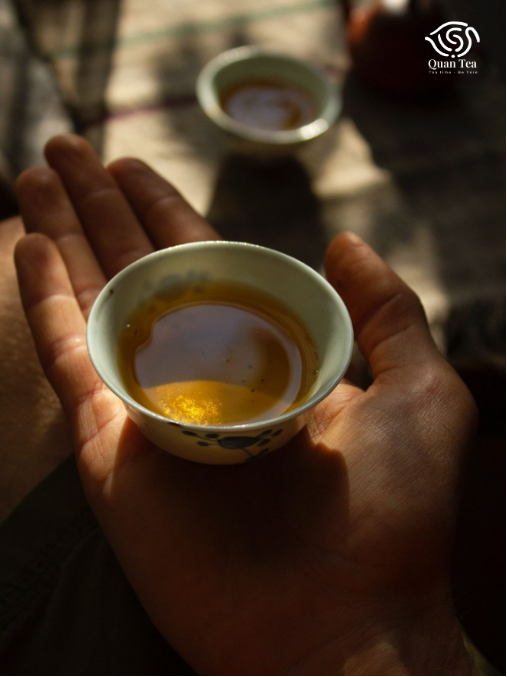
“The finest tea is never the one with the highest value, but the one that resonates most naturally with the person who drinks it.”
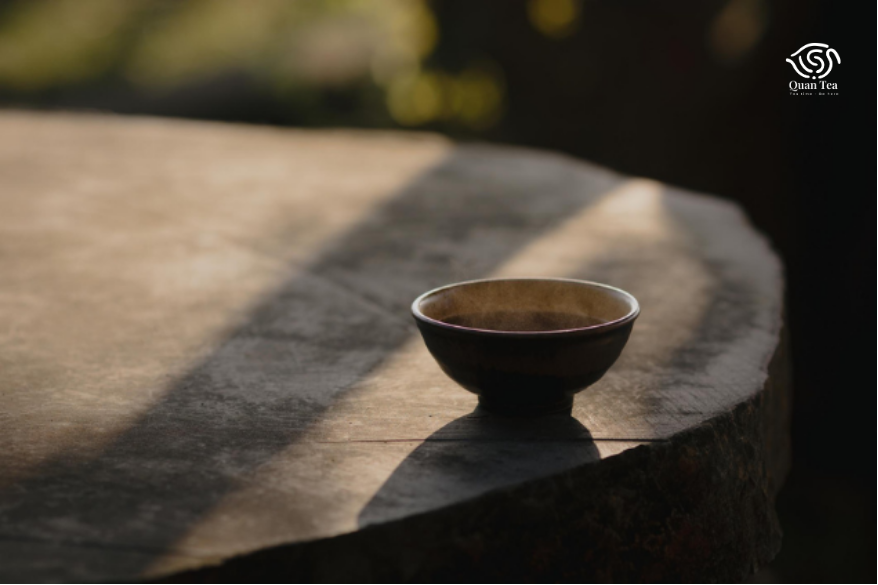
This question lies at the heart of Find Your Tea Profile, a concept developed by Quan Tea to redefine how people discover and appreciate specialty tea. Instead of beginning with an extensive tea list or technical tasting notes, the journey starts with the individual. The objective is not to identify the “best” tea—a notion that is ultimately subjective—but to uncover the relationship between a person’s sensory preferences and the unique character of different teas. Every recommendation is guided by the belief that flavour is deeply personal, shaped not only by physiology but also by memory, emotion, lifestyle, and the subtle rhythms that define everyday life.
This philosophy is supported by an increasingly recognised principle in sensory science: no two people experience flavour in exactly the same way. Sensitivity to bitterness, perception of aroma, preference for texture, and even the way aftertaste is interpreted vary from one individual to another. The same infusion may evoke delicate orchid blossoms for one guest, the scent of rain-soaked cedar for another, while someone else may simply remember the refreshing clarity that lingers long after the final sip. None of these responses are more correct than the others. Together, they illustrate that every person carries a unique sensory map, one that continues to evolve throughout life.
At Quan Tea, this idea is translated into what is known as a Tea Profile, a framework built upon three complementary dimensions of perception.
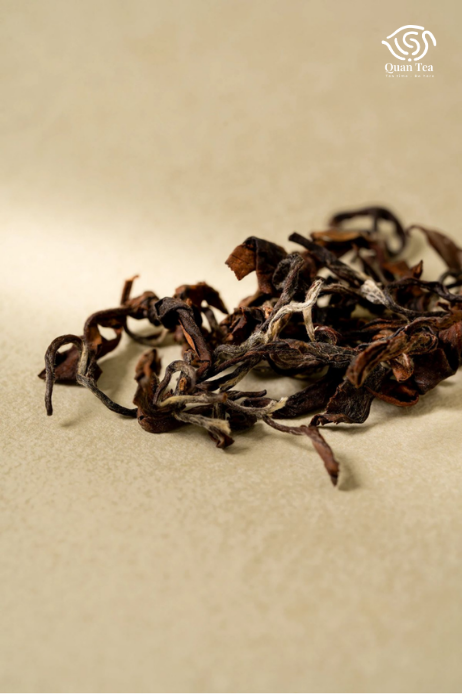
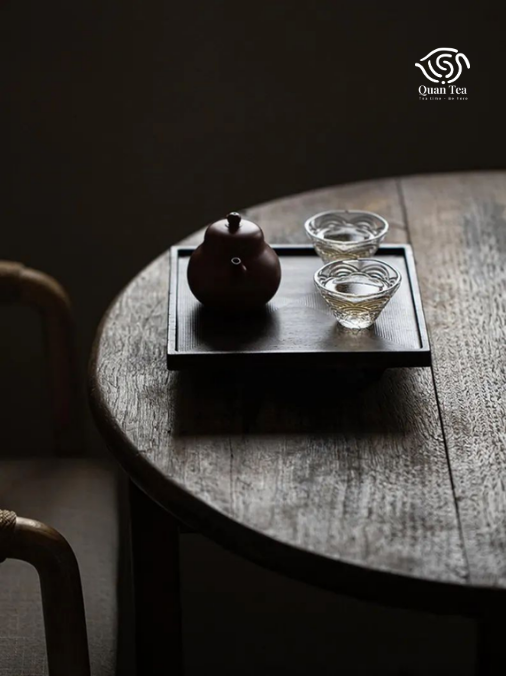
“Tea Profile is not a label.
It is a living reflection of memory, perception and personal rhythm.”
The first is aroma, the most immediate expression of tea and often the first point of emotional connection. Some people instinctively gravitate towards floral fragrances, fresh fruits, or delicate honeyed sweetness, while others are drawn to roasted grains, mineral notes, aged wood, or the earthy character that develops through traditional craftsmanship. Aroma frequently resonates with memory before it is consciously analysed, making it one of the most personal aspects of tea appreciation.
The second dimension explores the structure of taste. Beyond sweetness or bitterness lies an entire architecture of texture and balance: the weight of the liquor, its softness or vibrancy across the palate, the gentle grip of tannins, the persistence of sweetness, and the length of its finish. Much like music, some people are captivated by clarity and simplicity, while others seek richness, complexity, and layers that continue unfolding long after the cup has been emptied. These preferences reveal far more than individual taste; they reflect the way each person naturally experiences sensory harmony.
The final dimension considers what Quan Tea describes as the tea’s energy profile. Throughout East Asian tea culture, the quality of a tea has never been measured solely by its flavour. Equally important is the feeling it leaves behind: a calm yet focused mind, quiet vitality without restlessness, or a sense of balance that gently accompanies the body long after the tea has been enjoyed. Rather than viewing these responses as abstract concepts, Quan Tea approaches them as observable aspects of the overall experience. Different teas create different emotional and physical impressions, and those impressions often become as memorable as the flavours themselves.
“Perhaps the true journey of tea begins not with discovering new leaves, but with discovering ourselves.”
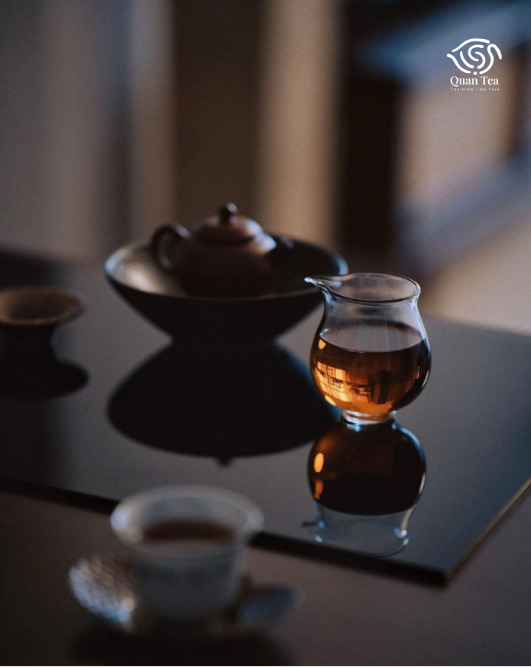
Perhaps this is where the true significance of Find Your Tea Profile lies. It is not about memorising more tea names or learning to identify increasingly complex tasting notes. It is about offering a different way to engage with tea—one that begins with self-awareness rather than expertise.
Understanding which teas resonate with us often reveals something larger than preference alone. It offers insight into the kinds of balance, comfort, vitality, and stillness we unconsciously seek in everyday life. A cup of tea, in this sense, becomes more than a beverage. It becomes a quiet mirror, reflecting not only what we taste, but who we are at a particular moment in time.
Like every meaningful journey of self-discovery, the answer rarely arrives all at once. It unfolds gradually, through changing seasons, evolving palates, shared conversations, and countless cups that each reveal something slightly different.
And perhaps that is the greatest beauty of tea.
It never asks us to become someone else.
It simply invites us to discover ourselves, one cup at a time.