


WHERE DOES THE HONEY AROMA IN TEA REALLY COME FROM?
WHERE DOES THE HONEY AROMA IN TEA REALLY COME FROM?
Unravelling One of Specialty Tea’s Most Enduring Misconceptions
1. When a Beautiful Story Becomes an Oversimplified Truth
Understanding tea often requires looking beyond stories that are easy to tell. Some of its greatest qualities emerge precisely because nature refuses to follow simple rules.
“The finest aromas are rarely created by a single cause, but by nature and craftsmanship working in harmony.”
2. A Conversation Between the Tea Plant and Nature
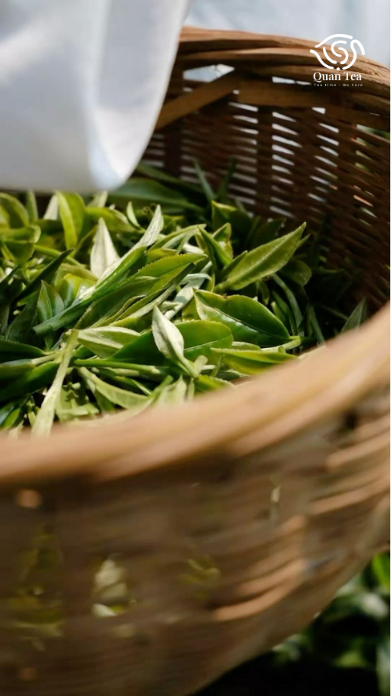
When the tea green leafhopper (Jacobiasca formosana) feeds on young tea shoots, the plant does not remain passive. Like many living organisms, it responds immediately by activating a complex defence mechanism, releasing a range of volatile organic compounds as part of its natural biochemical response.
These compounds alter the chemistry of the leaves long before they are harvested. Certain aromatic precursors increase, while others diminish, subtly changing the character of the leaf itself. Yet at this stage, the honey aroma recognised by tea drinkers does not actually exist. What has formed are only the molecular building blocks—the raw materials from which future aromas may eventually develop.
Nature has initiated the conversation, but the story is still unfinished.
3. Oxidation Is the True Architect of Aroma
Once harvested, the leaves enter the stage that ultimately defines their aromatic identity: processing.
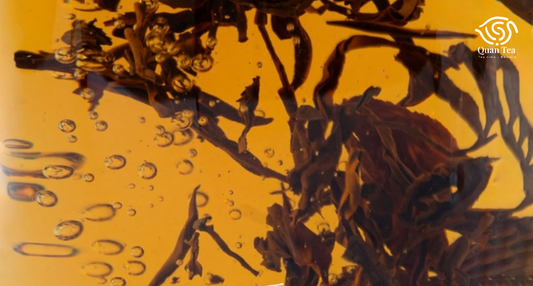
During withering, oxidation, rolling, and carefully controlled drying, naturally occurring enzymes begin transforming those aromatic precursors into entirely new volatile compounds. It is through these reactions that notes reminiscent of honey, ripe stone fruits, lychee, dried apricots, and wildflowers gradually emerge.
This explains why two batches of tea harvested from the same garden—even with similar levels of leafhopper activity—can taste remarkably different when crafted by different tea makers. Nature provides the potential, but craftsmanship determines how that potential is realised.
Oxidation, therefore, is not simply a technical step in tea production. It is the creative process through which hidden aromas are patiently revealed.
4. Not Every Honey Note Shares the Same Origin
Another widespread misconception is the assumption that every tea displaying honey-like aromas must have been influenced by leafhoppers. In reality, many highly oxidised oolongs, carefully crafted black teas, and even well-aged white teas naturally develop similar aromatic characteristics without any insect interaction at all.
From a sensory perspective, “honey” is not a single aroma molecule, but a descriptor used to describe a family of aromatic impressions. Different combinations of volatile compounds can evoke similar sensory memories despite originating through entirely different pathways.
For this reason, tea professionals today increasingly avoid reducing flavour to a single explanation. Describing aroma has become less about repeating familiar stories and more about understanding the remarkable complexity behind every cup.
“The leafhopper begins the conversation. Oxidation gives it a voice.”
5. What Truly Deserves Celebration Is Balance
Across today’s specialty tea community, transparency has become as valuable as craftsmanship itself. Tea drinkers are no longer satisfied simply knowing where a tea comes from; they are equally interested in understanding why it tastes the way it does.
At Quan Tea, honey notes are never presented merely as an engaging story that enhances a tea’s perceived value. Instead, they are an opportunity to share the extraordinary collaboration between ecology, plant biology, and human craftsmanship.
A truly memorable aroma is never the result of one isolated factor. It reflects the harmony of cultivar, terroir, seasonal climate, biodiversity, natural plant responses, and the precision of the tea maker’s decisions throughout processing. Each element contributes quietly, and none alone can claim authorship of the final expression.
The beauty of specialty tea lies precisely in this delicate equilibrium.
“Understanding tea is not about finding simpler answers, but appreciating more complex truths.”
6. The Deeper We Understand Tea, the More We Appreciate Its Complexity
Perhaps tea’s greatest fascination lies in its refusal to offer simple answers. Every cup is shaped by thousands of chemical transformations occurring between soil and climate, insects and plants, enzymes and human hands. A honey aroma may begin with the tea plant’s natural response to environmental stress, but it only becomes recognisable through hours of thoughtful craftsmanship and careful oxidation.
Rather than remembering that “honey aroma comes from leafhopper bites,” a more complete understanding would be this: Honey notes emerge from an intricate ecosystem in which nature begins the conversation, and craftsmanship gently brings it to life. That is the enduring beauty of specialty tea. Not because it is easy to explain. But because every deeper question reveals another layer worth discovering.