


THE CULINARY PHILOSOPHY OF QUAN TEA

THE CULINARY PHILOSOPHY OF QUAN TEA
When Fine Dining Finds Its Voice Through Plants
“Every ingredient carries the memory of its landscape. The chef’s craft lies not in transforming it, but in revealing its truest expression.”
For decades, fine dining has been synonymous with luxury. Rare ingredients, elaborate techniques, and meticulously choreographed courses have shaped the way we define exceptional dining. Yet, across the world’s leading culinary destinations, a quieter transformation has been unfolding—one that shifts the focus away from extravagance and towards something far more profound: the inherent beauty of nature itself.
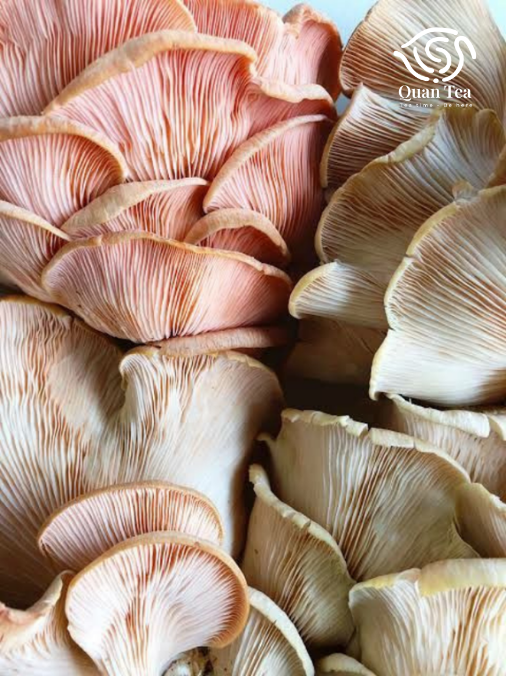
From Copenhagen’s celebrated New Nordic movement to Kyoto’s intimate tea houses, vegetables, mushrooms, grains, flowers, and tea have gradually stepped into the spotlight. No longer regarded as supporting elements or alternatives to animal-based cuisine, they are increasingly recognised as ingredients with their own identities, capable of expressing remarkable complexity, elegance, and seasonality.
This evolution reflects more than a culinary trend. It signals a broader change in how we experience food.
Today’s discerning diners are not simply searching for a vegetarian menu. They are seeking an experience where ingredients are celebrated for what they truly are—where flavour emerges from craftsmanship rather than imitation, and where every course reveals a deeper dialogue between nature and the plate.
“Plant-based cuisine, in this context, is no longer defined by absence.
It is defined by intention.”
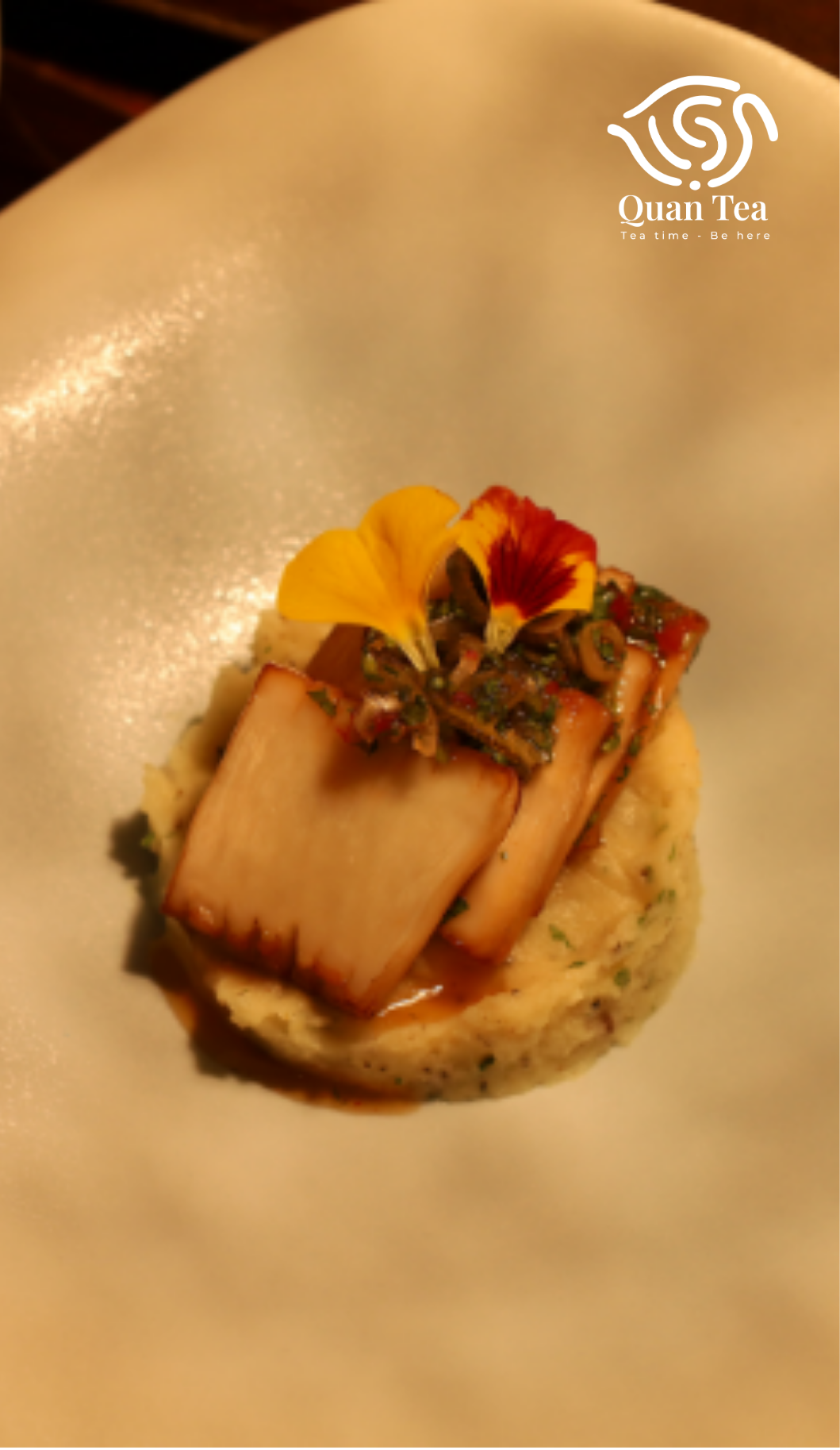
One of the most compelling qualities of working with plants lies in their quiet subtlety. Unlike ingredients with naturally assertive flavours, vegetables and mushrooms demand restraint, patience, and careful observation. A king oyster mushroom reveals entirely different textures depending on the intensity of heat. Lotus root can remain crisp and refreshing or become delicately tender through slow cooking, each expression equally beautiful in its own right.
Such ingredients invite chefs to listen rather than impose.
Rather than transforming them into something they are not, contemporary plant-focused cuisine seeks to reveal the character that already exists within them. Technique becomes a means of refinement rather than reinvention.
In many ways, this philosophy mirrors
the practice of preparing tea.
No tea master attempts to alter the essence of a leaf. Instead, attention is devoted to creating the ideal conditions for its aroma, sweetness, minerality, and lingering finish to unfold naturally. Cooking with plants follows much the same principle. The finest dishes are often those that preserve the integrity of an ingredient while gently revealing its hidden dimensions.
This philosophy has shaped Quan Tea from the very beginning.
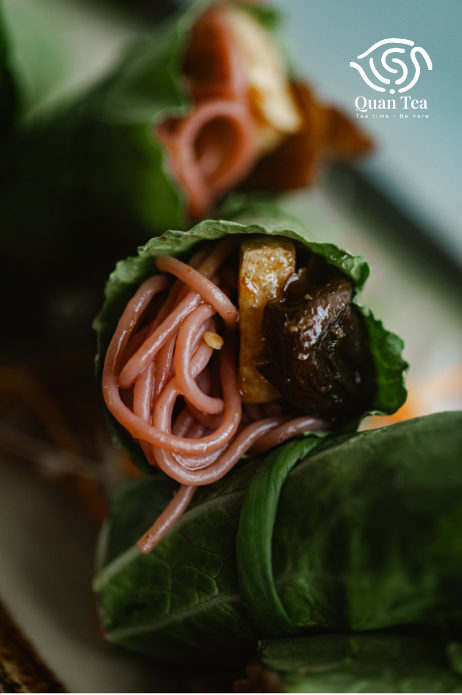
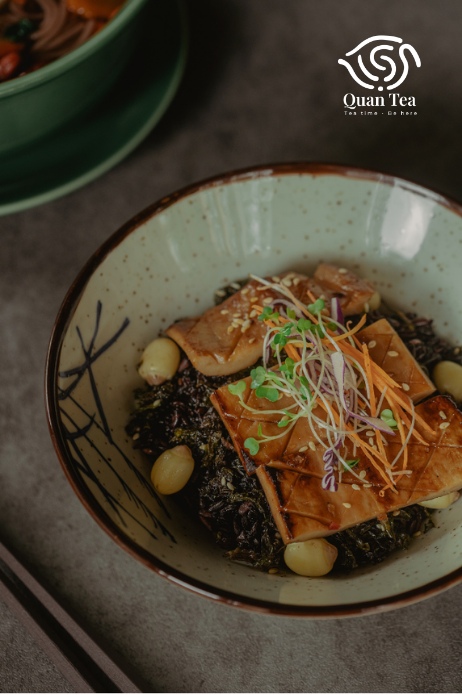
Rather than recreating familiar meat-based dishes through plant substitutes, the kitchen embraces ingredients on their own terms. Mushrooms are not intended to resemble meat, nor is lotus root asked to imitate seafood. Each vegetable, grain, and botanical carries its own story—one rooted in seasonality, geography, and time.
A king oyster mushroom offers remarkable natural umami alongside a satisfying texture. Fresh lotus root brings subtle sweetness and an unmistakable crispness born from the soil. Ancient Shan Tuyet tea leaves develop mineral depth and gentle smokiness through decades of growth in Vietnam’s high mountains.
There is no need for these ingredients to become something else.
Their authenticity is precisely what makes them extraordinary.
For Quan Tea, plant-based cuisine has never been about restriction or replacement. Nor is it intended to persuade guests towards a particular lifestyle. Instead, it is an invitation to rediscover ingredients with greater curiosity—to appreciate their natural rhythms, their quiet elegance, and the stories they carry from field to table.
“Tea is never served alongside the meal. It becomes part of
the cuisine itself.”
CEO Pema Vuong, Quan Tea Dining
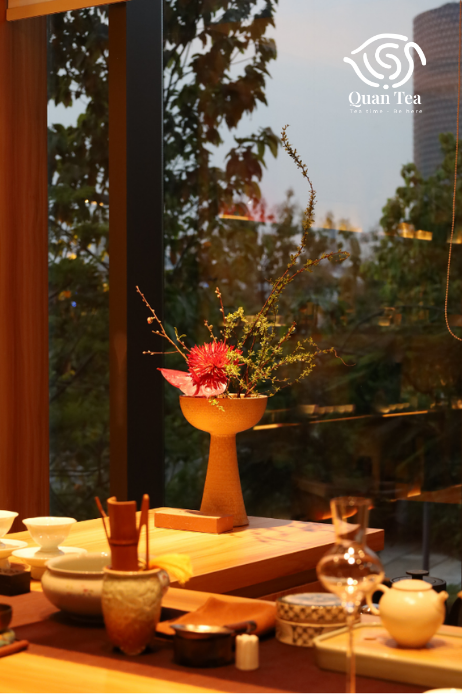
“At Quan Tea, tea is never merely served alongside a meal—it becomes part of the conversation between nature, flavour, and time.”
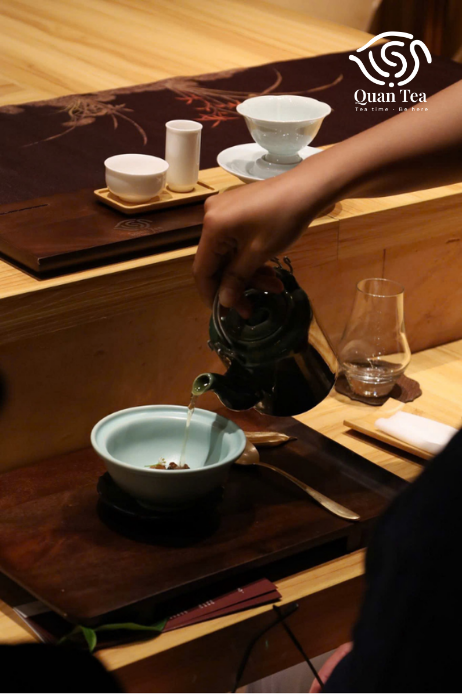
If wine has long been regarded as the defining companion to Western fine dining, tea occupies a remarkably similar role across much of Asia. Yet its contribution extends beyond the teacup.
Tea shapes broths, enriches sauces, perfumes desserts, and influences the rhythm of an entire meal. More importantly, it refines the palate, allowing each course to unfold with greater clarity and balance.
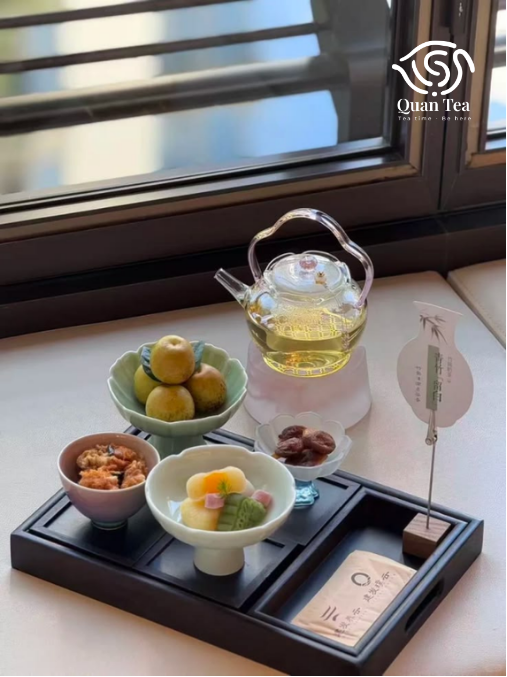
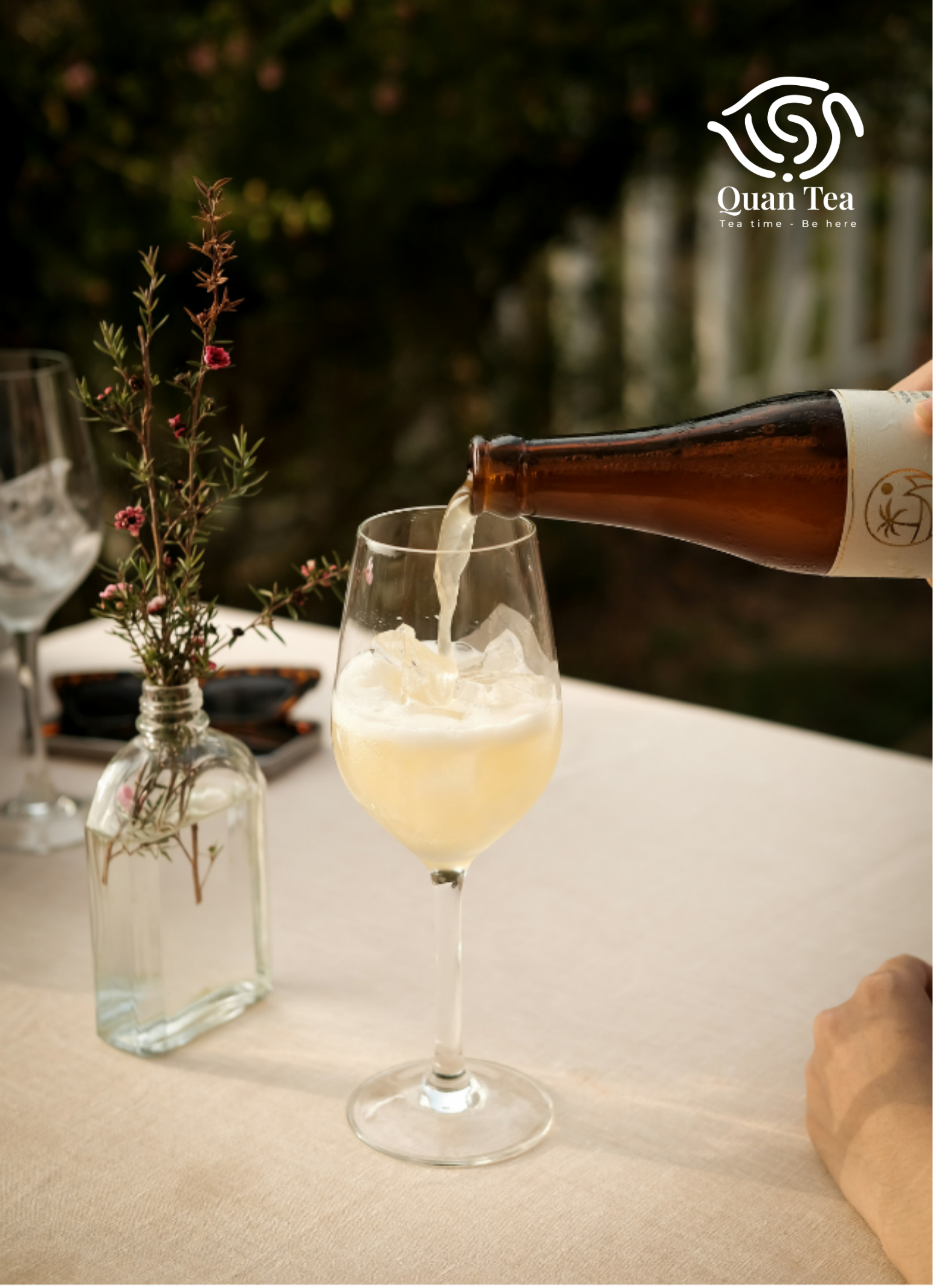
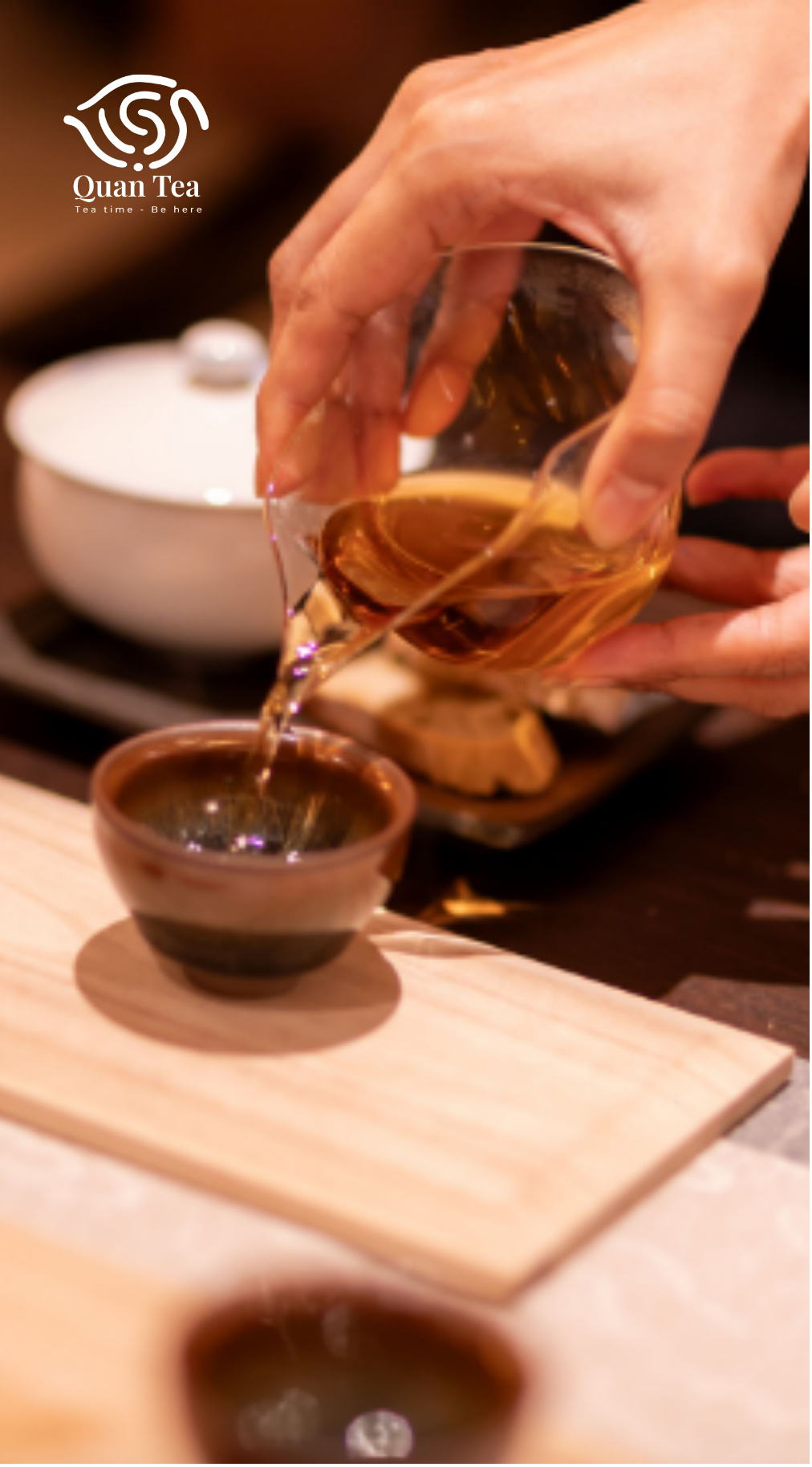
At Quan Tea, tea is approached not merely as a beverage, but as an ingredient in its own right.
A carefully selected oolong may lend structure to a delicate broth. Shan Tuyet tea introduces gentle tannins that cleanse the palate between courses. White tea contributes quiet floral notes that elevate rather than dominate. Each variety is chosen not for prestige alone, but for its ability to converse naturally with the ingredients surrounding it.
Tea becomes an invisible thread, connecting one course to the next.
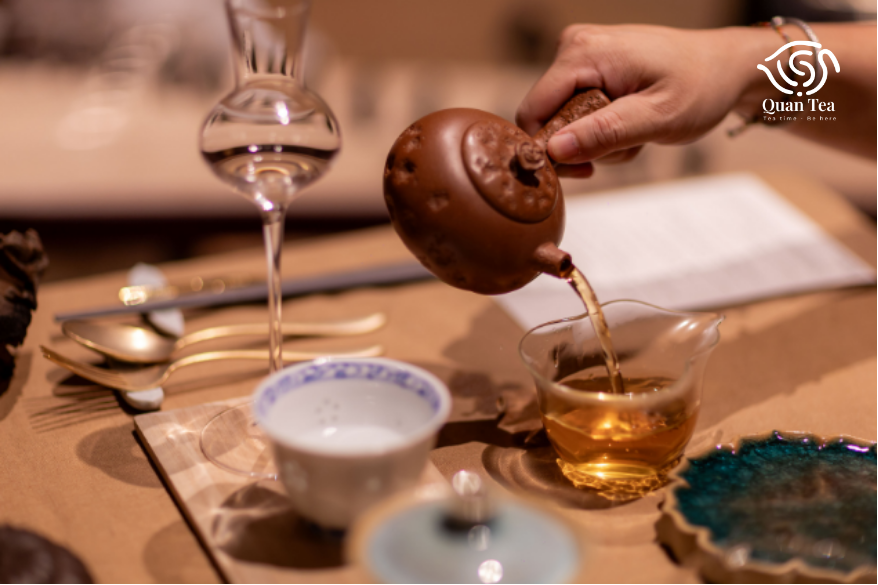
This philosophy finds its fullest expression through Quan Tea’s Tea Omakase experience.
Borrowed from the Japanese concept of omakase—”I leave it up to you”—the experience invites guests to place their trust in both the chef and tea master. Together, they curate a seasonal narrative where every course, every infusion, and every pairing unfolds with intention.
Menus evolve with the harvest. Wild mushrooms appear when their flavour is at its peak. Seasonal herbs, flowers, and vegetables shape each chapter of the experience. Tea itself changes with climate, altitude, and harvest, ensuring that no two seasons are ever exactly alike.
Rather than offering a fixed collection of signature dishes, Quan Tea presents a living expression of the seasons.
Each menu becomes a moment in time.
The concept of Tea Omakase was born from this very spirit.
If “omakase” in Japanese conveys the meaning of “entrusting oneself to another,” then at Quan Tea, what guests entrust is not simply their choice of what to eat, but also their willingness to step into an experience that is yet to be discovered. The chef and Tea Master become storytellers, guiding guests through layers of flavors thoughtfully composed around the season, the ingredients, and the emotions they evoke.
No two seasons are ever exactly the same.
Just as no two tea leaves carry precisely the same flavor from one harvest to the next.
This philosophy gives Quan Tea’s menu a sense of constant movement. Mushrooms change with the seasons. Vegetables, fruits, and flowers are selected at the moment they are at their finest throughout the year. Even tea reveals different nuances as the weather, humidity, and harvesting time shift. What guests experience, therefore, is not merely a menu, but the imprint of a particular season — a fleeting moment that can never be recreated in exactly the same way.
Perhaps this is also what makes contemporary culinary experiences so captivating. People are no longer seeking luxury as a measure of status, but rather a deeper connection with the origins of the ingredients, the people who create the dishes, and their own senses and emotions in each moment at the table.
Fine dining, in its most beautiful sense, has never been an art of extravagance.
It is the art of understanding.
Understanding nature, to know the right season to harvest a tea bud.
Understanding ingredients, to recognize the moment when a mushroom reaches its finest expression of flavor.
And understanding people, to realize that what makes a meal truly memorable is not the number of courses or the complexity of the techniques, but the feeling that lingers long after everything has come to an end.
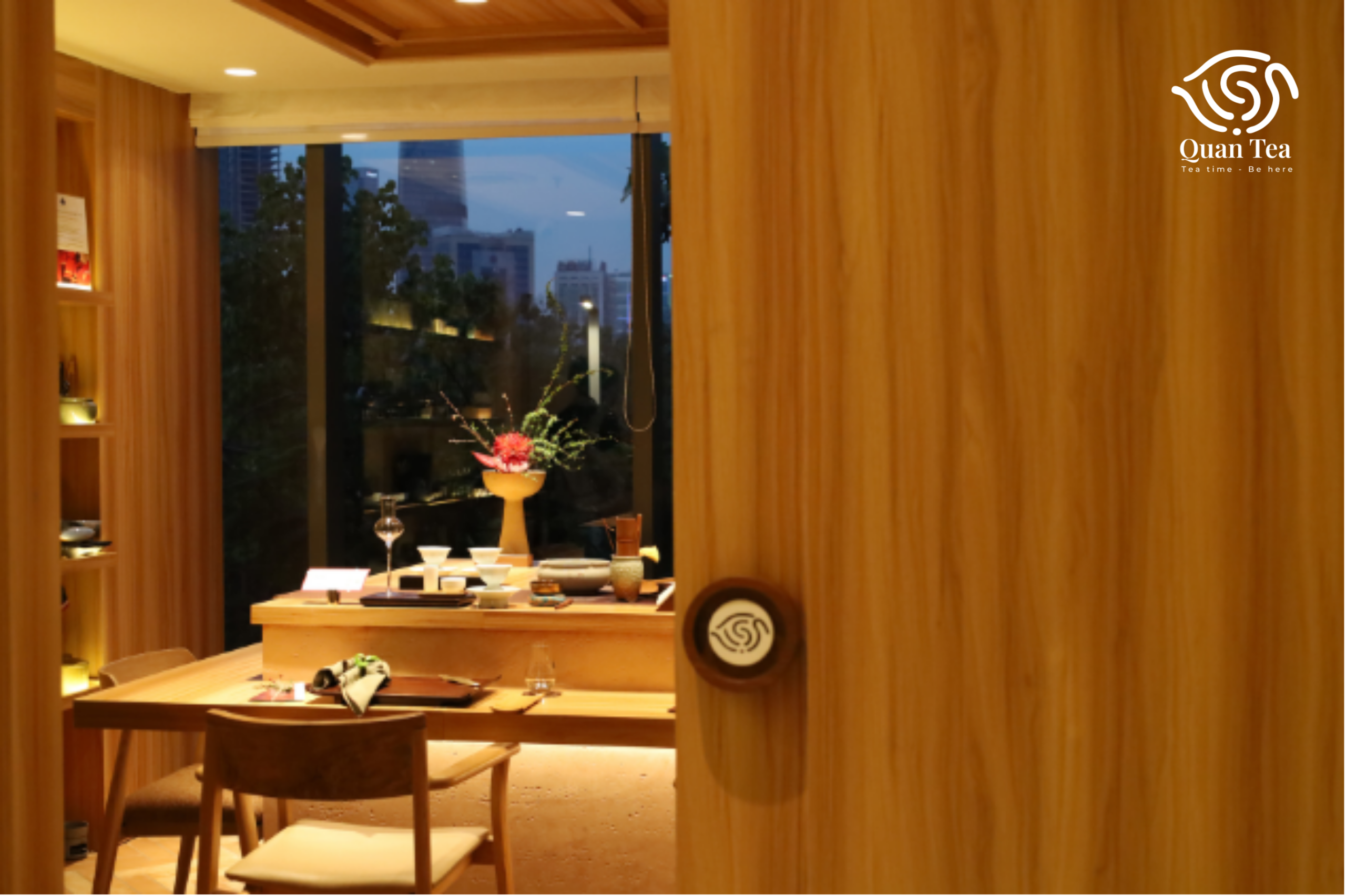
“At its finest, fine dining is never about display. It is an expression of understanding—of nature, of ingredients, and of time.”
Perhaps this reflects the future of fine dining itself.
Luxury is no longer measured solely by rarity or extravagance. Increasingly, it is found in authenticity—in understanding where ingredients come from, respecting their natural character, and allowing them to speak without unnecessary intervention.
For Quan Tea, plant-based fine dining is neither a trend nor a substitute for conventional gastronomy. It is a different way of seeing food altogether: one where plants are honoured for their own identities, tea becomes an integral culinary ingredient, and every meal offers an opportunity to reconnect with nature through taste, seasonality, and mindful craftsmanship.
Because, in the end, the most memorable dining experiences are rarely defined by what was served.
They are remembered by what quietly lingers long after the final cup of tea has been poured.