


WHEN STILLNESS BECOMES PART OF THE DESIGN
WHEN STILLNESS BECOMES PART OF THE DESIGN
Modern Zen and the Art of Creating a Space That Breathes
1. A Beautiful Space Does Not Always Invite Us to Slow Down
In recent years, the phrase quiet luxury has become one of the defining ideas in contemporary architecture, hospitality, and design. Unlike traditional notions of luxury, which often rely on opulence or visual spectacle, quiet luxury speaks through restraint. It is a form of sophistication that reveals itself gradually, where every material, proportion, and detail has been carefully considered—not to impress at first glance, but to create an atmosphere of effortless harmony.
It is no coincidence that many of the world’s most celebrated tea ateliers, boutique hotels, and fine dining destinations have embraced the language of Modern Zen. From Kyoto to Copenhagen, from traditional Japanese ryokan to contemporary Scandinavian hospitality, design has shifted away from ornamentation towards something far more subtle: spaces that naturally encourage people to breathe more slowly, speak more softly, and become fully present in the moment.
This philosophy lies at the heart of Quan Tea.
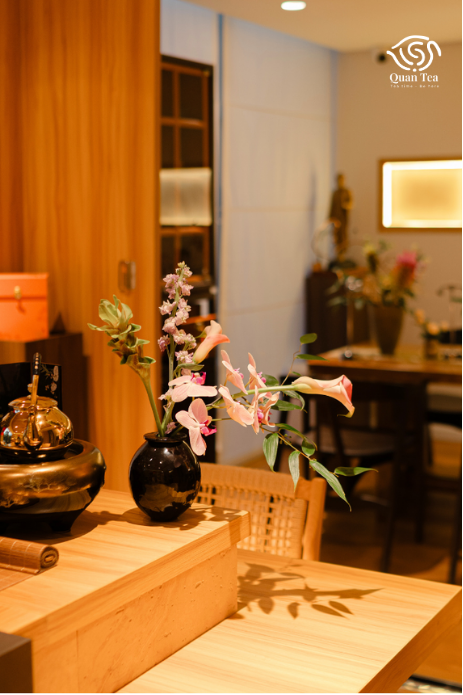
“The most luxurious spaces are not those that impress the eye, but those that gently quiet the mind.”
2. Modern Zen Is Not Simply Minimalism
Modern Zen is often mistaken for minimalism. While the two share a common appreciation for simplicity, they are guided by different intentions. Minimalism seeks to remove what is unnecessary. Modern Zen, by contrast, is deeply concerned with the quality of what remains.
Within Japanese aesthetics, emptiness has never been regarded as an absence. Instead, it is considered an essential element of composition. The concept of Ma—the meaningful interval between objects, sounds, or movements—has shaped Japanese architecture, art, and tea culture for centuries. A quiet pause before pouring tea, the space between two chairs, or an uncluttered wall all contribute as much to the experience as the objects themselves.
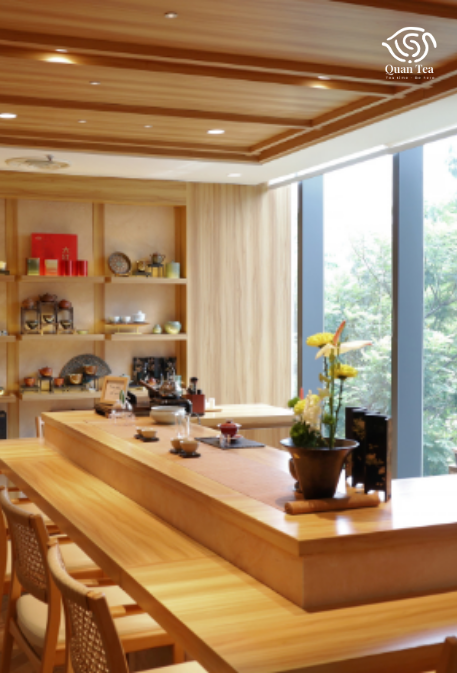
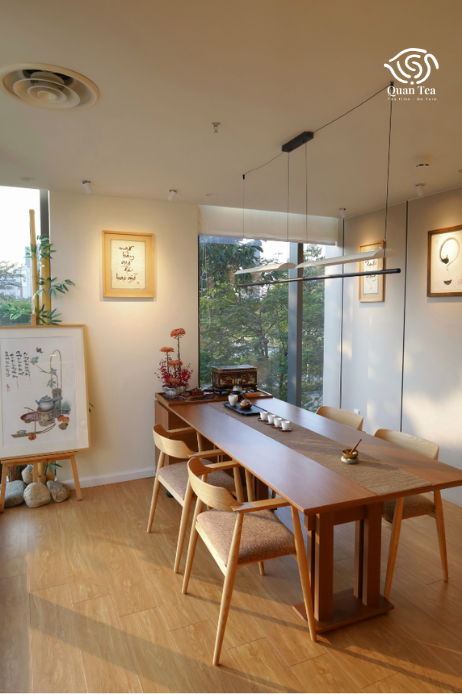
This philosophy informs every aspect of Quan Tea’s environment. Natural stone, warm oak, handcrafted ceramics, textured linen, and softly diffused lighting are not chosen merely for visual appeal. Together, they create a space that feels calm, grounded, and welcoming—a place designed not simply to be admired, but to be inhabited.
3. When Light, Materials and Sound Become Part of Flavour
Modern sensory science has repeatedly demonstrated that taste is influenced by far more than food or drink alone. Lighting, acoustics, spatial proportions, textures, and even ceiling height subtly shape the way our brains perceive flavour.
Bright environments often encourage people to eat more quickly. Loud background noise can diminish our ability to detect delicate aromas and subtle nuances. Natural materials such as wood, stone, and clay, meanwhile, foster a sense of warmth and psychological comfort, allowing attention to settle more naturally on the dining experience itself.
At Quan Tea, interior design is therefore never treated as a decorative backdrop. It is considered an integral part of the tasting journey.
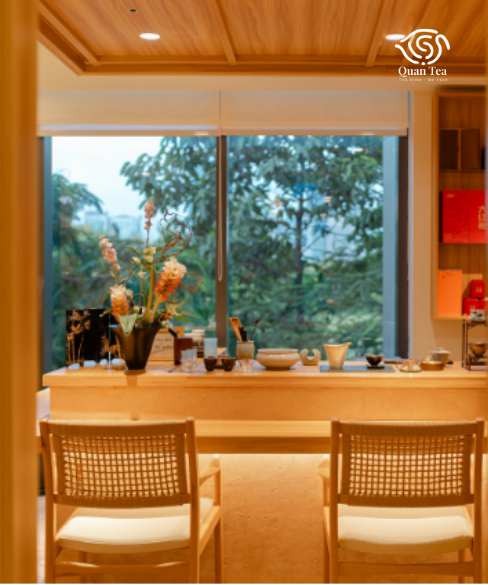
Lighting is intentionally softened so that every cup of tea becomes the quiet focal point without appearing theatrical. Seating arrangements preserve intimacy while respecting personal space. Music exists only as a gentle layer within the atmosphere, supporting the room rather than dominating it. Every design decision serves a single purpose: to remove distraction and deepen presence.
4. Designing a Space That Breathes
There is a quality shared by spaces people instinctively wish to return to. They possess what might be described as room to breathe.
This has little to do with square metres or soaring ceilings. Instead, it is the absence of visual pressure. Objects are given space to exist without competing for attention. Every material has the opportunity to be appreciated on its own terms.
Japanese tea culture has long understood that pauses between movements carry equal importance to the movements themselves. Architecture follows a similar rhythm. When the eyes are allowed to rest, the mind gradually follows. Only then do we begin to notice the rising steam above a teacup, the first unfolding aromas, or the quiet sound of water being poured behind the tea counter.
Modern Zen does not attempt to manufacture silence by eliminating every sound. Rather, it creates the conditions in which silence can naturally emerge.
5. The Ritual Begins Long Before Tea Is Served
Across many East Asian traditions, the tea ritual begins well before the first sip. It starts the moment a guest crosses the threshold.
The way light guides one’s path, the quiet welcome from a Tea Master, the gentle movement of a chair, the placement of a linen napkin, or the brief pause before water is poured—these gestures may seem almost imperceptible, yet together they gently shift the guest into a different state of mind.
At Quan Tea, these moments are understood as part of a carefully choreographed hospitality experience. Every gesture is intentionally restrained so that nothing interrupts the dialogue between the guest and the tea itself. Rather than creating the sensation of being served, the experience is designed to feel as though one is being quietly accompanied through a slower, more mindful rhythm.
Within this context, architecture is no longer merely a setting for tea. It becomes part of the ritual itself.
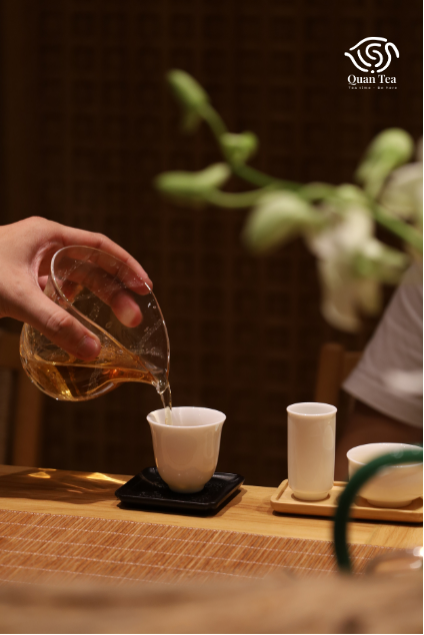
“In Modern Zen, empty space is never empty. It is where stillness begins.”
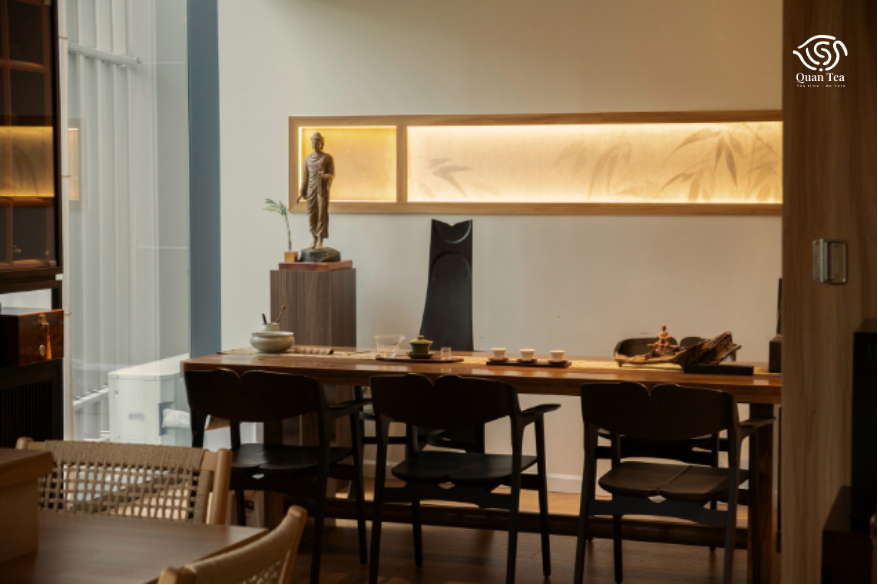
Quiet Luxury Is What Remains After Everything Else Has Stepped Back
Perhaps the clearest sign of thoughtful design is that guests rarely remember the design itself.
Instead, they remember how naturally the conversation unfolded. How the tea somehow seemed more fragrant. How lunch lingered longer than expected. How, upon leaving, what stayed with them was not a particular chair, wall, or lamp, but an unmistakable feeling of calm.
That is the essence of quiet luxury.
It is not a luxury that asks to be noticed.
It is a luxury that is quietly felt.
At Quan Tea, Modern Zen is never treated as a decorative style. It is a philosophy of hospitality that allows space, light, material, and silence to work together in service of a single purpose: creating enough stillness for every guest to experience tea with complete presence. Because sometimes, the most memorable element of a place is not what it adds to the experience—but what it gently removes.